















|
|
||||||||||||||||
|
|
|
|
|
|
|
|
|
|
|
|
|
|
|
|
|
|
|
|
|
|
|
|
|
|
|
|||||||||
|
The Origin of Gravity >> Mass-free Gravity <<
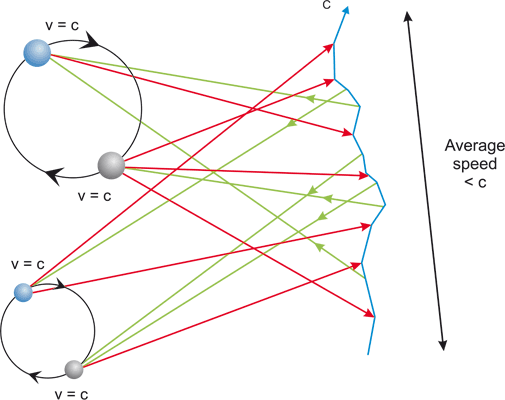
The acceleration of a particle in free fall is caused by the refraction of its oscillating components
by a cloud of exchange particles.
- It also includes all the phenomena of General Relativity. -
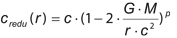
2 Bending of a Beam of Light Passing a Massive Object
where c
is the speed of light in gravity-free space, credu is the reduced speed of light in the field, G is the
gravitational constant; M is the mass of the source, which is traditionally said to cause the gravitational potential;
and r is the distance from the centre of the gravitational source. The power p is
1/2
or 1 depending on the direction of motion with respect to the centre of gravity; it is 1 for the radial direction and
1/2
for the tangential one. |
|||||||||||||||||||
|
|
||||||||||||||||||||
|
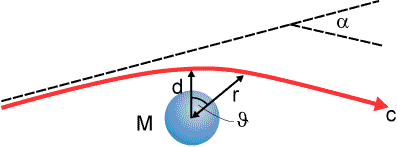
The deflection of a light beam passing the sun was correctly stated for the first time by Albert Einstein. He predicted
the gravitational acceleration of the photon to be twice the value of the Newtonian acceleration (as first predicted by
von Soldner in 1801). This has historically been taken as important proof of Einstein’s concept of a 4-dimensional curved
space-time. We will, however, see that Einstein’s concept is not necessary to achieve this result. A calculation based on
the classical assumptions of refraction yields the same result. | ||||||||||||||||||||
 |
(2.2) |
|||||||||||||||||||
|
Taking into account the dependency of the reduction of c on x and y, which follows in a somewhat complex way from equations (2.1) and (2.2), we get |
||||||||||||||||||||
 |
(2.3) |
|||||||||||||||||||
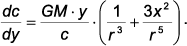
| Taking the derivative of this equation with respect to y yields | ||||||||||||||||||||
 |
|
|||||||||||||||||||
|
Here we assume that the deflection is small (i.e. α < < 1, so (x,y) describes an almost straight line).
We can then determine the differential angle of deflection, dα, by applying the classical mechanism of refraction and assuming credu ≈ c. : |
||||||||||||||||||||
 |
|
|||||||||||||||||||
| If we now replace r and x by ϑ, the angle between the direction of the vertex of the path (i.e. the closest position to the sun) and the actual position, and y by d in eq. (2.4) we get | ||||||||||||||||||||
 |
(2.6) |
|||||||||||||||||||
| Integrating equation (2.6) over ϑ from ϑ = -π/2 to ϑ = π/2 yields | ||||||||||||||||||||
 |
(2.7) |
|||||||||||||||||||
| Inserting the appropriate values | ||||||||||||||||||||
|
- G
= 6.674 ·
10-11 m3 kg-1 s-2 |
|
|||||||||||||||||||
|
and converting to degrees, we get the correct result of |
||||||||||||||||||||
|
1.75 arc-sec . |
|
|||||||||||||||||||
|
This corresponds to twice the classical gravitational acceleration (Newton) and agrees
with observation. Both the numerical result and the analytical result (2.7) also conform to the predictions of general
relativity – however without resorting to general relativity and space-time curvature.
2.2 The Acceleration
|
||||||||||||||||||||
 |
(2.8) |
|||||||||||||||||||
| Inserting (2.5): | ||||||||||||||||||||
 |
|
|||||||||||||||||||
| into this we get | ||||||||||||||||||||
 |
(2.9) |
|||||||||||||||||||
|
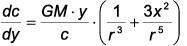
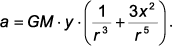
Now using (2.4): |
||||||||||||||||||||
 |
||||||||||||||||||||
| yields | ||||||||||||||||||||
 |
(2.10) |
|||||||||||||||||||
| At the vertex, x = 0 and y = r, giving | ||||||||||||||||||||
 |
(2.11) | |||||||||||||||||||
| which is the value of the Newtonian acceleration for this particular position. | ||||||||||||||||||||
|
From the dynamic parameters of an elementary particle, its spin and its magnetic moment, and also from its relativistic behaviour it follows that a particle is made up of two sub-particles, which we will call "basic particles" and which orbit each other at the speed of light c as shown in figure 3.1. |
||||||||||||||||||||
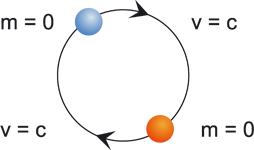 Figure 3.1: Basic Particle Model |
 Top |
|||||||||||||||||||
|
This structure was in principle already found by Erwin Schrödinger in 1930, when he analysed
the Dirac function of the electron and found that there must be a permanent internal oscillation at the speed of light c.
He gave this oscillation the German name "Zitterbewegung" ("ZBW"). The Basic Particle Model assumes that this structure is valid for all leptons and also for all quarks.
3.3 Gravity Acting on an Object at Rest
3.3.1 Gravitational Acceleration in a Special Orientation |
||||||||||||||||||||
|
|
Top
|
|||||||||||||||||||
|
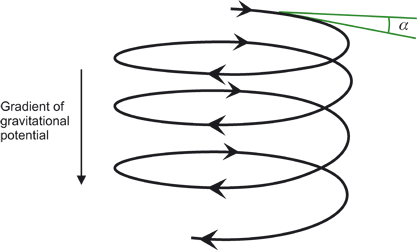
Figure 3.2 shows the downward accelerated motion. Note that only the path of one of the two basic particles is shown here to keep the drawing simple. In this case the acceleration of the (composite) elementary particle is similar to the acceleration given in equation (2.11) |
||||||||||||||||||||
|
|
(3.1) | |||||||||||||||||||
|
which is again the value of the Newtonian acceleration.
3.3.2 Gravitational Acceleration in Arbitrary Orientations |
||||||||||||||||||||
|
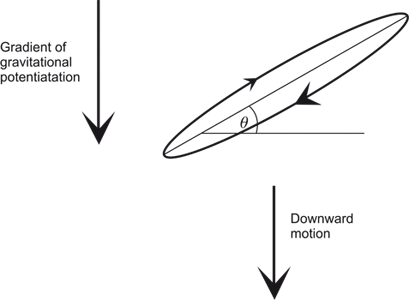
Figure
3.3: General orientation of a particle |
Top |
|||||||||||||||||||
|
In this case only the projection of the refraction in the vertical direction is effective for gravity. This means on the one hand that the gravitational acceleration is reduced compared to the case discussed above. However, on the other hand, this reduction is compensated for by an increase in the refraction of the vertical component as seen in eq. (2.10), i.e. the term with a factor of 3. So in the case of an arbitrary orientation of the elementary particle too, we can get the result given in eq. (3.1) |
||||||||||||||||||||
 |
||||||||||||||||||||
|
which is the well-known result for the classical case (Newton). 4 The Equivalence Principle
4.1 Equivalence Classically |
||||||||||||||||||||
|
4.2 Equivalence Based on the Particle Model Looking at figure 3.2, it is obvious that the deflection of the path of the basic particles is independent of the radius of the particle and, because of the particle model used here, independent of the mass of the particle. So the fact that the gravitational acceleration is independent of the mass has a very natural cause. No assumptions about any equivalence are needed. Figure 3.2 shows why an elementary particle at rest is subject to gravitational acceleration. It is in fact gravitational lensing on a microscopic scale. This is the physical cause of the independence of gravitational acceleration from the mass of an object. |
||||||||||||||||||||
|
|
||||||||||||||||||||
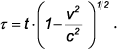 |
(5.1) | |||||||||||||||||||
| Here t is the time as measured in the system at rest, and τ in fact describes the development of temporal processes in the system in motion. Taking the derivative of this equation with respect to t and squaring and rearranging the result, we get: | ||||||||||||||||||||
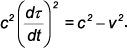 |
(5.2) | |||||||||||||||||||
|
In a gravitational field this time-dependent behaviour changes. The understanding of this change guides us directly to the Schwarzschild solution.
|
||||||||||||||||||||
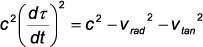 |
(5.3) | |||||||||||||||||||
|
where vrad and vtan denote the radial und the tangential components of the speed
with respect to the centre of the gravitational source. Now we have to take into account the fact that c changes in a gravitational field in the following way according to (2.1): |
||||||||||||||||||||
 |
Top |
|||||||||||||||||||
|
where p is
1/2
or 1 depending on the direction of motion in respect to the centre
of gravity. Furthermore, the size of the elementary particles changes in the gravitational field because the speed of light c changes in the field. By taking this fact into account when using eq.(5.3) we get – as deduced in detail in the appendix B: |
||||||||||||||||||||
 |
(5.4) | |||||||||||||||||||
| The equations are usually simplified by defining the so-called Schwarzschild radius rs | ||||||||||||||||||||
 |
(5.5) | |||||||||||||||||||
| and we can also denote the derivative with respect to t by a prime. This leads to: | ||||||||||||||||||||
 |
(5.6) | |||||||||||||||||||
|
which is a popular way of writing the Schwarzschild solution.
A detailed deduction is given in appendix B of the pdf-version.
6.1 The Variation of the Speed of Light |
||||||||||||||||||||
|
|
Top |
|||||||||||||||||||
|
According to the Basic Particle Model, the field due to any basic particle is
made up of a similar collection of elementary charges (of the strong field), and it is therefore
independent of the type of elementary particle to which the basic particle belongs.
Hence the flow of exchange particles is also independent of the type of particle. Consequently
the reduction in c and thus the gravitational effect is also independent of the type of particle,
which means that it is independent of the size and consequently independent of the mass of the elementary particle.
Every elementary particle provides the same contribution to the gravitational field. This understanding contradicts conventional physics, but it helps to overcome the principle problems of present-day gravitational physics. Remark: The above explanation may appear to conflict with the fact that the forces within an elementary particle in the binding function have a limited range. This seems not to conform to the infinite range of the gravitational field. The solution is that the binding field is set up as a multi-pole field by an arrangement of monopole charges, producing the strong force. The exchange particles of these monopole charges, which cause the disturbance in the path of a light-like particle, have an unlimited range as we know from the case of electric charges. 6.2 Speed Reduction in Detail |
||||||||||||||||||||
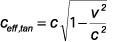 |
(6.1) | |||||||||||||||||||
|
as this is a perpendicular disturbance of the path. In the radial direction it is |
||||||||||||||||||||
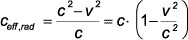 |
(6.2) | |||||||||||||||||||
|
which is greater than in the former case, being a longitudinal disturbance of the path. The effective size of the effect on the speed depends on two factors
|
||||||||||||||||||||
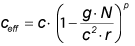 |
(6.3) | |||||||||||||||||||
|
where again p =1 for radial motion and p = 1/2
for tangential motion.
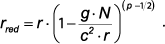
Furthermore, the extension of the binding field in an elementary particle and hence the size of any objects in a gravitational field is given by the equation |
||||||||||||||||||||
 |
||||||||||||||||||||
|
Here we have used N to denote the number of elementary particles
causing the gravitational field, to reflect the fact that this influence is independent of the mass of a particle.
And so we have to use a different gravitational constant, denoted here by g.
|
||||||||||||||||||||
7 Present Problems with Gravity
7.1 The "Dark Matter" Phenomenon Some decades ago the rotational speed within and around big galaxies was discovered to conflict with the equilibrium speed determined on the basis of standard gravity. Figure 7.1 shows the discrepancy for the galaxy NGC 3198. |
||||||||||||||||||||
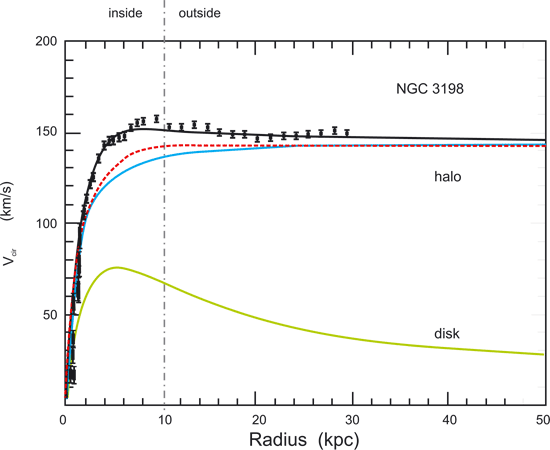 Figure 7.1: Equilibrium conflict for the galaxy NGC 3198 (The radius of the galaxy is 10 kpc)
|
Top |
|||||||||||||||||||
|
The solid (green) curve labelled "disk" is the rotational speed as a function of the radius based on a normal gravitational calculation. The uppermost individual values are measurements of the actual speed; a curve (also solid, black) is fitted through these measurements. The intermediate solid (blue) line labelled "halo" describes the distribution of the assumed "dark matter" that is required in order to explain the measured values. The red dotted line, which is very close to the "halo" curve, follows from the assumption described above, whereby every elementary particle contributes equally to the gravitational field. It represents the contribution of light particles, i.e. neutrinos and photons. In the drawing, the height of this line has been chosen to fit the needs of this diagram, but it fits the assumed data within a tolerance of a factor of 2-3; its curvature, however, is given by the natural distribution of the light particles and is not parameterised. Of the light particles mentioned, the photons are mainly generated by the hot, bright stars at the centre of the galaxy. The neutrinos are similarly generated by the nuclear processes within the stars, the sources of which are also mostly in or close to the centre of the galaxy. These particles create a continuous flow away from the centre at the speed of light c (or almost this speed). This flow causes their spatial distribution to be |
||||||||||||||||||||
 |
||||||||||||||||||||
| where ρ is the density of the particles and r is the distance from the centre of the galaxy. The number of particles N within a sphere up to a radius r0 is then | ||||||||||||||||||||
 |
||||||||||||||||||||
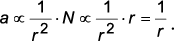
| The acceleration a towards the centre of the gravitational field (with r0 here renamed r) is | ||||||||||||||||||||
 |
||||||||||||||||||||
| The centrifugal acceleration on the other hand is | ||||||||||||||||||||
 |
||||||||||||||||||||
|
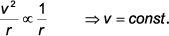
In order to keep these two accelerations in a balance, it follows for the orbital speed v that |
||||||||||||||||||||
 |
||||||||||||||||||||
|
This is the reason for the curvature of the red dotted line in figure 7.1,
and so it provides the necessary contribution to the gravitational field which is elsewhere attributed to so-called "dark matter".
8 Conclusion
|
||||||||||||||||||||
|
1. The weakness of this
effect (which is primarily not a force) The investigation of the cause of the related processes explains
1. The phenomenon called "dark matter"
The related understanding of relativity in general
solves the apparent problem of dark energy in a very easy - and physical - way.
Details of the calculations given in the preceding are presented in the appendix (pdf-version), and in a book series [1]. |
||||||||||||||||||||
|
4 References [1] Michael C. Duffy and Joseph Levy, Ether Space-Time & Cosmology, Vol. 3, Apeiron (2009) 143 – 192 NOTE: The concept of mass-independent gravitation
was first presented at the Spring Conference of the German Physical Society (Deutsche Physikalische Gesellschaft)
on 5 March 2005 in Berlin by Albrecht Giese.
| ||||||||||||||||||||
Comments are welcome. Subtitles: The Origin of Gravitation . Massfree Gravity . 2024-07-04 |
Top |
|||||||||||||||||||